

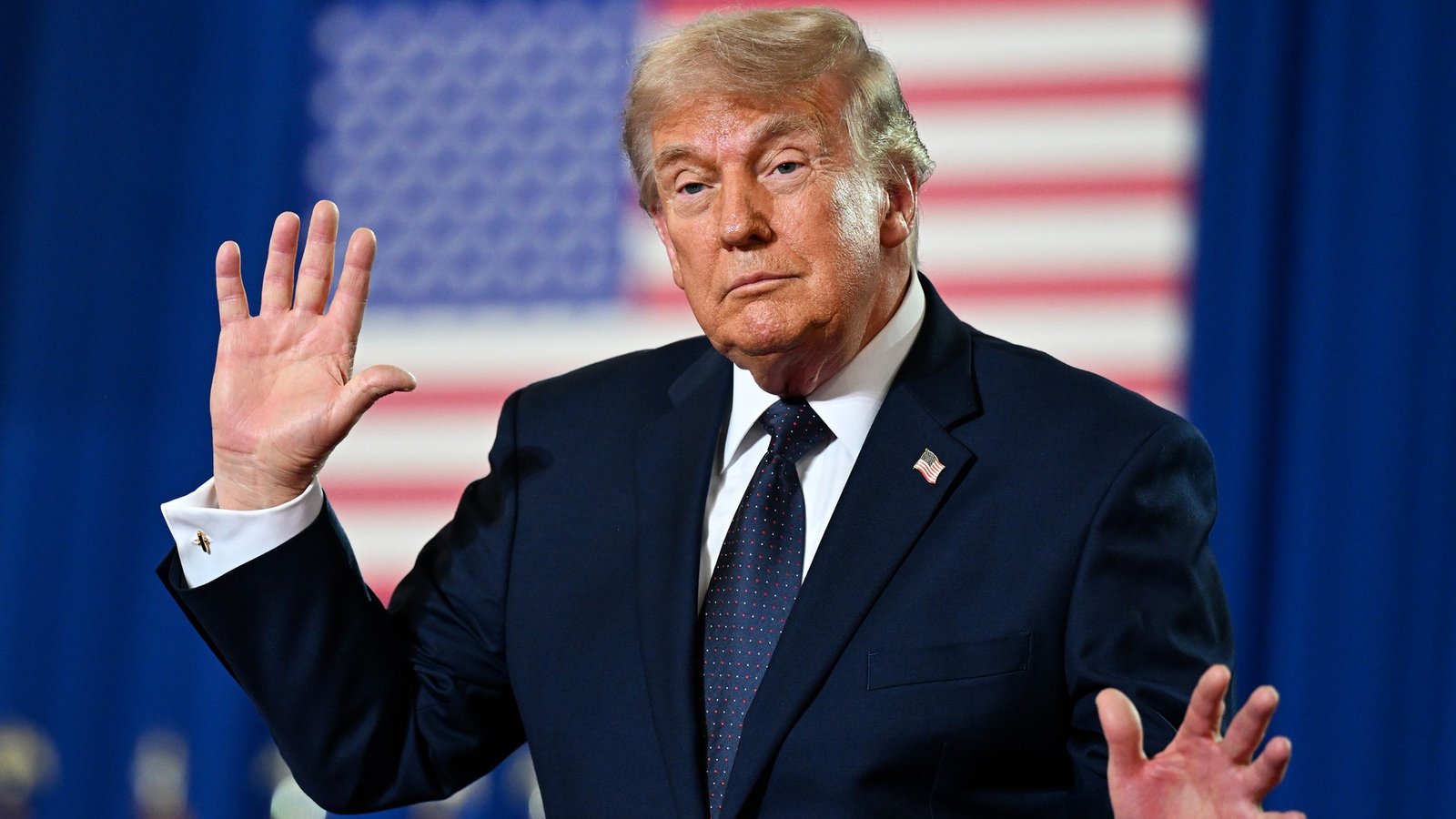
The White House released results from President Donald Trump’s medical examination, with his physician, U.S. Navy Capt. Sean Barbabella, saying he’s in “excellent health” but advising that he loses weight.
Trump, 79, went through the exam Tuesday at Walter Reed National Military Medical Center, which included a review of all diagnostic studies and laboratory testing conducted over the past year, and consultations with twenty-two specialty providers from multiple academic institutions.
The president is up to date on all his necessary preventive screenings and immunizations, Barbabella said, as well as cancer screenings, cardiovascular risk assessment, and metabolic evaluations.
“President Trump remains in excellent health, demonstrating strong cardiac, pulmonary, neurological, and overall physical function,” Barbabella said. “His demanding daily schedule, including multiple high-level meetings, public engagements and regular physical activity, continues to support his overall well-being. Cognitive and physical performance are excellent. He is fully fit to carry out all duties of the commander-in-chief and head of state.”
Preventive counseling included guidance on the president’s diet, recommendations for him to take a low-dose aspirin, increased physical activity, and continued weight loss.
At a height of 75 inches, or about 6 feet and 3 inches, and a weight of 238, is considered overweight, and within about a pound or so of being considered obese. Last year, he weighed 224 pounds.
A coronary CT angiography showed no arterial obstruction or structural abnormalities of the heart or major vessels, and an electrocardiogram (ECG) analysis enhanced with artificial intelligence estimated his cardiac age to be 14 years younger than his actual age.
Trump’s head, ear, nose and throat were all normal, though there is scarring on his right ear, “consistent with [a] prior gunshot injury” he sustained during a shooting at a campaign rally in Butler, Pennsylvania.
Much attention has been placed on Trump’s health, mostly focusing on two visible issues: swelling in his legs and recurring bruising on his hands.
Trump was diagnosed with chronic venous insufficiency last summer, after undergoing evaluation for swelling in his legs. According to the Cleveland Clinic, chronic venous insufficiency (CVI) occurs when veins in the legs are damaged and can’t properly manage blood flow. It is considered common among older adults. Slight lower leg swelling was noted in the president’s most recent exam, though Barbabella said there was improvement from last year.
An examination of Trump’s hands revealed bruising, which Barbabella said is “consistent with minor soft tissue irritation related to freaking handshaking in the setting of aspirin use for cardiovascular prevention.”
“This represents a common and benign effect of aspirin therapy,” he added.
Trump addressed the bruising issue himself earlier this year, telling The Wall Street Journal that he takes aspirin because he does not want “thick blood” moving through his heart.
While aspirin can cause bruising, experts note that it can have multiple other causes as well.
When it comes to Trump’s cognitive function, he scored a 30 out of 30 on the Montreal Cognitive Assessment.
Trump’s appointment on Tuesday was his third scheduled medical visit in just over a year.
He went to Walter Reed last April for his annual physical and returned again in October for what officials initially described as a follow-up visit. The White House later disclosed that doctors conducted a CT scan and said the imaging found no abnormalities.
Round out your reading
- Tennessee officials will pay $835,000 for jailing man over Charlie Kirk meme.
- Why the immune system turns on women more often than men.
- More than 340 newspapers block the Wayback Machine. What that means for the future of the internet.
- Why Rep. Cohen filed articles of impeachment against Supreme Court Justice John Roberts.
- We’re building a new Straight Arrow. Help us shape our future by taking our survey.