

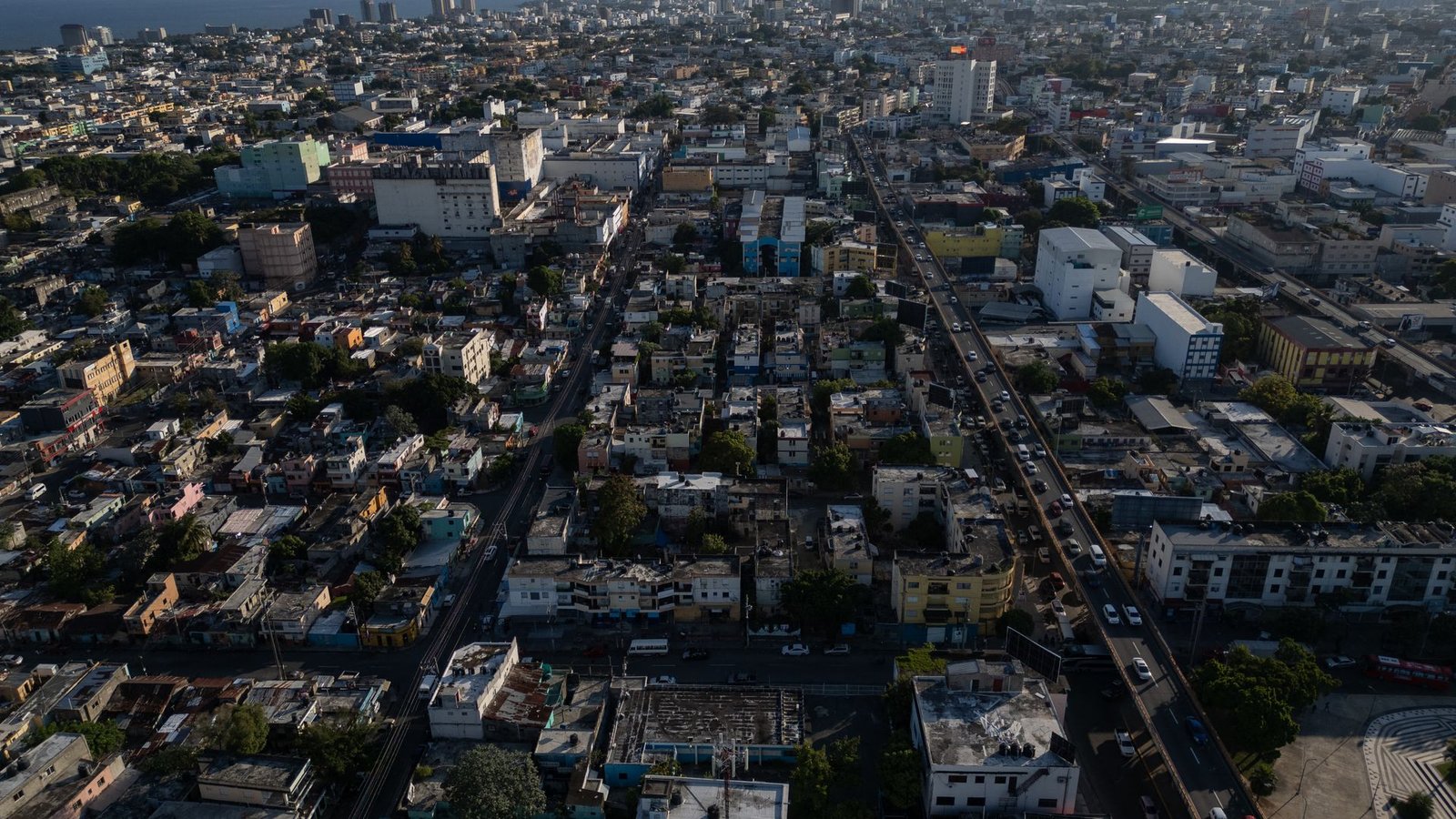
A nuclear deal between the U.S. and the Dominican Republic. It’s not every day you hear America talking about nuclear power with a country that has roughly the same population as Ohio.
On Wednesday, the U.S. signed a nuclear cooperation memorandum of understanding with the Dominican Republic.
In their announcement, the U.S. State Department said this will advance peaceful civil nuclear cooperation between the two countries.
What it means
“It’s not a particular deal of any sort,” Ashley Finan, global fellow at the Columbia Center on Global Energy Policy, said. “It’s a strategic cooperation framework and kind of a diplomatic tool to structure discussions and have government-to-government conversations about potential nuclear cooperation on nuclear energy or medical and other applications like that.”
Essentially, it’s a document that will help shape any discussions for a more concrete agreement in the future.
The DR has been looking into nuclear energy and modernizing their energy laws for some time now.
The country has energy issues, including a nationwide blackout earlier this year.
“They actually have a vice minister of nuclear energy, and they are working with the International Atomic Energy Agency to consider development of a nuclear electricity program,” Finan said. “So, they’ve been doing this for a number of years.”
This MOU could potentially lead to what’s known as a 1-2-3 deal.
That kind of deal would establish the framework for significant transfers of nuclear material or peaceful nuclear technology between the United States and a foreign nation.
It’s called a 1-2-3 deal because it’s covered under Section 123 of the U.S. Atomic Energy Act.
“It’s a long and very serious process that involves lots of embassies, the office of the president, involves Congress and others,” Finan said.
For a long time, a nuclear power plant did not make sense for a country the size of the DR because it, frankly, would have been too much power for the size of its grid.
“Now that there have been a lot of companies developing smaller reactors, those could be more right-sized for a grid like the Dominican Republic’s,” Finan said.
Weapons?
In their announcement, the State Department uses the word “civil” three different times.
Oftentimes, people hear the word nuclear and immediately think of Cillian Murphy blowing up a bomb in a Christopher Nolan film.
This agreement is entirely focused on everything nuclear, except weapons.
The DR has made it clear they take nonproliferation seriously. They’ve signed essentially every major international treaty when it comes to nuclear nonproliferation.
That includes the first major treaty in 1971, a treaty that prohibits nuclear weapons in the Caribbean, and most recently, a treaty on the prohibition of nuclear weapons.
“They are clearly very committed to a civilian-only program,” Finan said.
While the U.S. and the DR may go into a further agreement, don’t expect America to have nuclear warheads on the island anytime soon.
Roughly 31 countries currently generate energy through nuclear power, and that’s something the DR has a clear interest in.
“I think this is a positive step,” Finan said.
Global impact
The DR is roughly 830 miles off the coast of the United States.
For the U.S. government, it is likely important they become the dominant nuclear energy supplier in the world, especially in their own backyard.
The U.S. is the top nuclear generating country, followed by China, France and Russia.
It behooves the U.S. to help countries like the DR.
“If you are the nuclear energy supplier for a country, that tends to be a century-long relationship, because you have a decade or more prior to the first build, then you have a reactor that’s going to operate for 60, 80 or 100 years,” Finan said.
America has more than two dozen 1-2-3 agreements in place that allow peaceful nuclear cooperation with 50 countries.
Those include large countries like Brazil and Japan, as well as smaller ones like Morocco and Vietnam.
Another reason the U.S. could be trying to be the world leader in exporting nuclear energy is safety.
“We have great interest in seeing that nuclear energy development around the world is done with the best safety standards and really strong security and nonproliferation standards,” Finan said. “And we think that the United States has some of the strongest standards in the world in those areas and [safer] than China or Russia.”
Round out your reading
- Could a common dietary supplement accelerate Alzheimer’s?
- NY AG Letitia James gets hundreds of taunts, racial slurs in ICE public reporting portal.
- As Musk becomes the first trillionaire, historian sees warning signs.
- An experimental weight loss drug is so effective, many Americans don’t care it’s not FDA approved.
- How search engine optimization reduced Simone Biles to an ‘NFL wife’.