

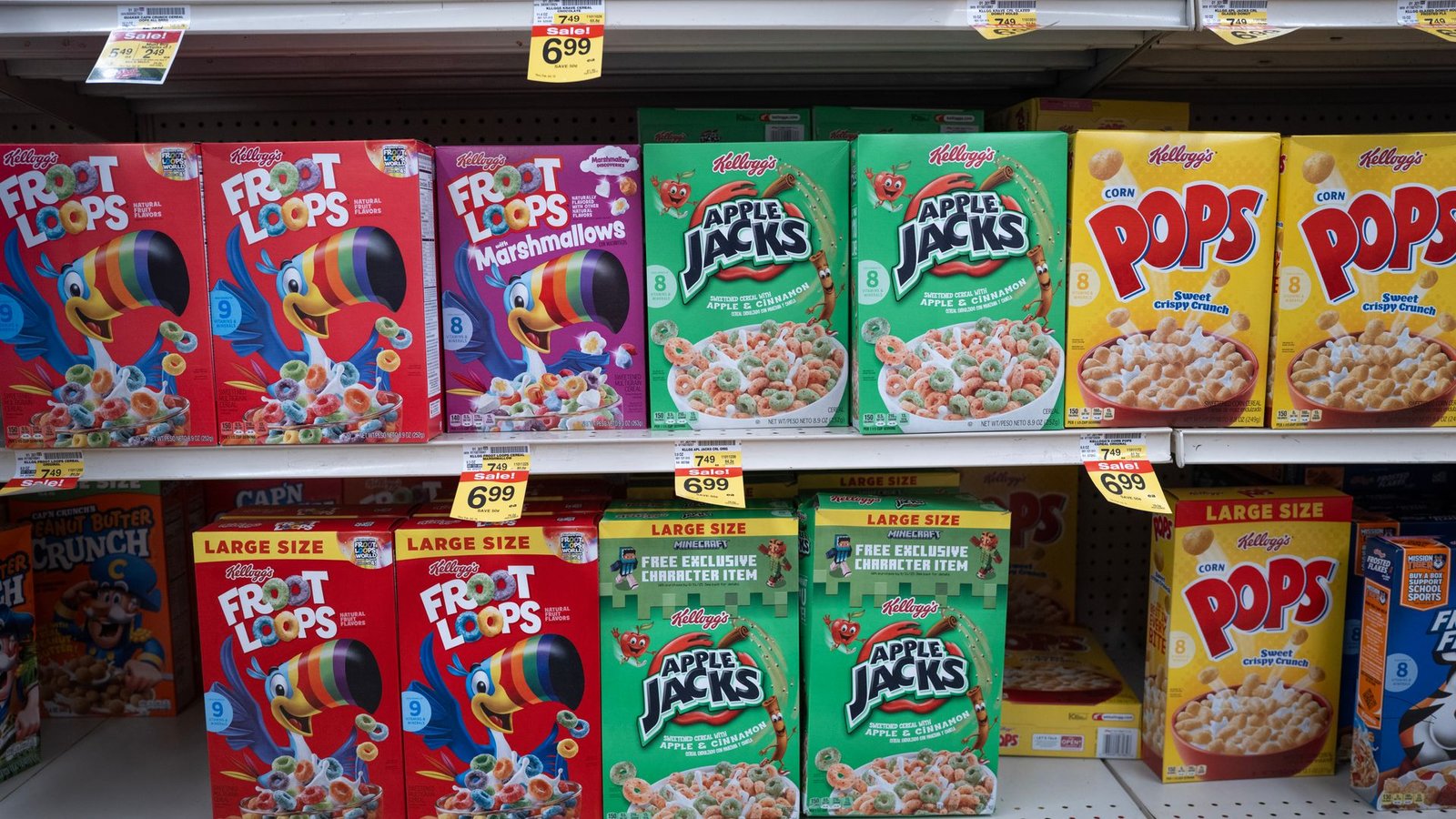
Kellogg’s will permanently remove artificial food dyes from its breakfast cereals by 2027. The announcement was made by Texas Attorney General Ken Paxton, who said the company is legally agreeing to remove the colorings following a months-long investigation and ongoing negotiations.
Paxton said Kellogg’s is the first to sign a legally binding agreement, as opposed to other companies that have made verbal commitments.
“The signed (agreement) demonstrates that Kellogg’s is committed to keeping this pledge, and I commend the company for doing the right thing,” Paxton said in a statement. “I encourage other food manufacturers to sign similar agreements to demonstrate their commitment to helping Americans live healthier lives.”
“We see the growing focus on health as an opportunity to meet consumer needs in even more meaningful ways,” Kellogg’s told SAN in a statement.
The company provided a timeline in addition to its statement.
“We are reformulating our cereals served in schools to not include FD&C colors by the 2026-27 school year, we will not be launching any new products with FD&C colors beginning in January 2026, and by the end of 2027 we will completely remove FD&C colors from the small percentage of our foods that contain them today,” Kellogg’s said.
What other companies are committed to removing dyes?
Other companies that have announced they’ll remove food dye from their products include Kraft-Heinz, Hershey, General Mills, PepsiCo, Tyson’s and others.
Most food dyes are made with synthetic petroleum-based chemicals, according to the Center for Science in the Public Interest. They have no nutritional value and are only used to enhance the colors of foods.
Froot Loops contain Red 40, Yellow 5, Blue 1 and Yellow 6.
Apple Jacks contain Yellow 6, Yellow 5, Red 40 and Blue 1.
According to the Cleveland Clinic, Red 40 can lead to hyperactivity, including ADHD, behavioral challenges like irritability and depression, skin irritation and migraines. The other dyes have been shown to have negative side effects.
However, according to the FDA, scientific evidence compiled in 2023 shows that most children have no adverse effects, though some evidence suggests certain children may be sensitive. An advisory committee within the FDA found that there was no established link between the dyes and behavioral issues in children.