

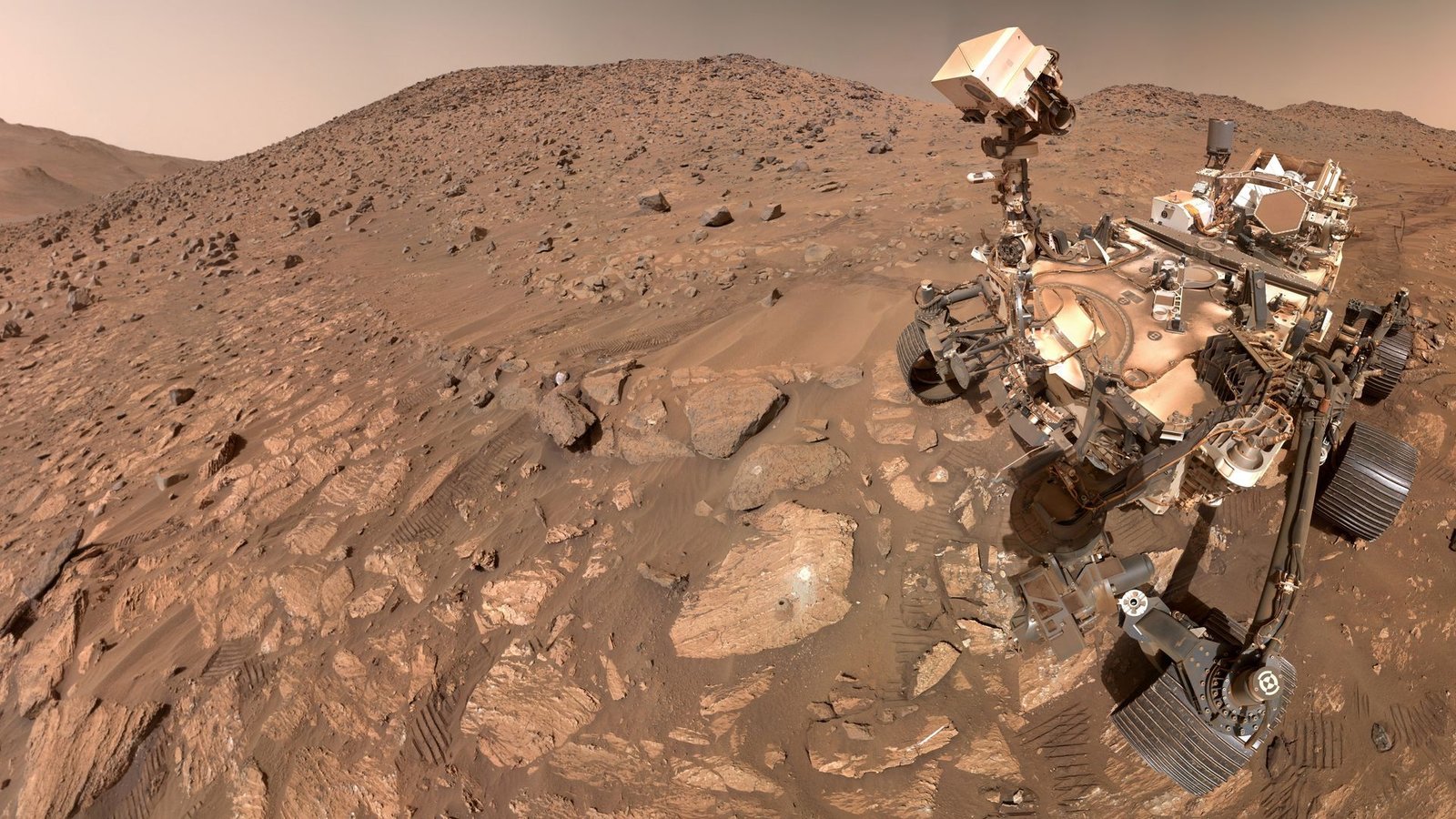
NASA’s Mars rover Perseverance may have found evidence of potential ancient microbial life on Mars, but scientists stress that an analysis on Earth is needed to confirm that possibility. While NASA’s science mission chief Nicky Fox said it is “certainly not the final answer,” she added that it’s ”the closest we’ve actually come to discovering ancient life on Mars.”
How the samples were taken
Researchers released the findings on Wednesday. The news comes as the rover continues its fourth year of combing through Mars’ landscape. Since 2021, the vehicle has used a drill and tubes to gather samples from places that may have once supported life billions of years ago. The latest sample came from a dried up river bed, according to the study published in the journal Nature.
Initial tests from the rover showed the mudrock samples contained carbon, iron phosphate and iron sulfide, known to be chemical compounds produced by microorganisms on Earth.
Scientists emphasize caution
Scientists note that while it’s an “exciting discovery,” they emphasized other processes other than biological ones could be responsible for the chemicals found inside the sample.
“That’s part of the reason why we can’t go so far as to say. ‘A-ha, this is proof of life,’” lead researcher Joel Hurowitz told the Associated Press. “All we can say is one of the possible explanations is microbial life, but there could be other ways to make this set of features that we see.”
Still, Hurowitz said it’s the most promising samples from the rover of potential signs of ancient life on the Martian surface.
“It would be amazing to be able to demonstrate conclusively that these features were formed by something that was alive on another planet billions of years ago, right?” Hurowitz told the AP. Either way, he called it “a valuable lesson in all of the ways that nature can conspire and fool us.”
Further analysis may take years
The samples now are waiting on a ride back to Earth, which may reportedly take years as NASA aims to find quicker and cheaper retrieval options, for further analysis.
When the rover launched in 2020, scientists anticipated it would bring back samples to Earth by the early 2030s. However, that date has been pushed to the 2040s as costs have risen dramatically to $11 billion, which has halted retrieval missions.
Until the samples can be returned to Earth, scientists say they will perform experiments here to determine the possibility of ancient life on the red planet. NASA officials have also floated the idea of sending equipment to Mars to analyze material for potential signs of former life as well.
The study comes as the Trump administration announced earlier this year a renewed focus on Mars as it aims to cut billions of dollars elsewhere from the agency.
The post NASA’s Perseverance finds potential evidence of ancient life on Mars: Study appeared first on Straight Arrow News.