

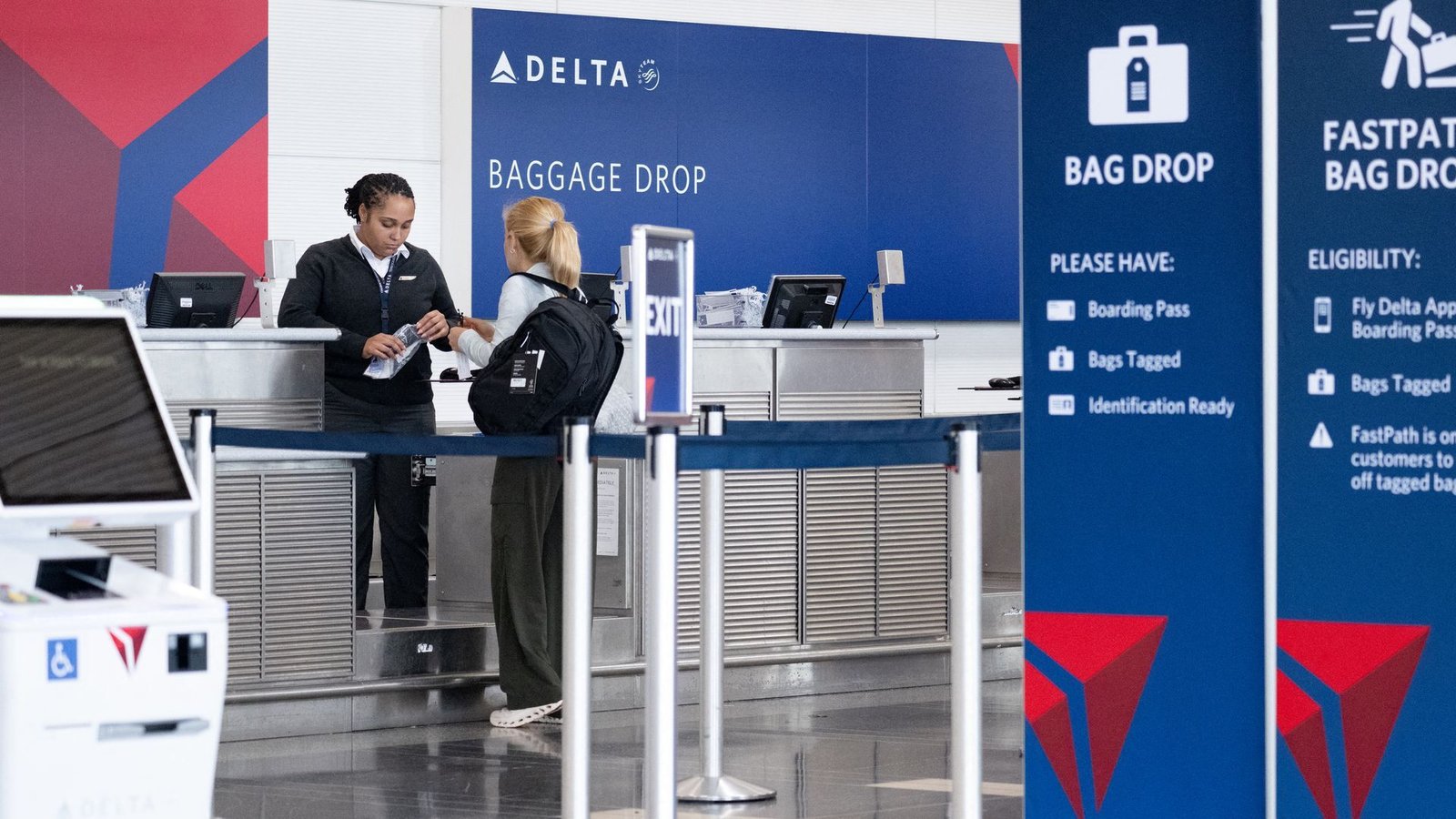
A trio of U.S. lawmakers want answers from Delta Air Lines over an announced expansion of artificial intelligence (AI) to set individual passenger fares. Senators argued Delta’s new pricing practice is full of privacy concerns.
Democratic Sens. Ruben Gallego of Arizona, Richard Blumenthal of Connecticut, and Mark Warner of Virginia sent a letter on Monday, July 21, to Delta, demanding details of its strategy to employ AI-based revenue systems across 20% of its U.S. network later in 2025.
“Individualized pricing, or surveillance-based price setting, eliminates a fixed or static price in favor of prices that are tailored to an individual consumer’s willingness to pay,” they wrote in a letter to the airline. “Delta’s current and planned individualized pricing practices not only present data privacy concerns, but will also likely mean fare price increases up to each individual consumer’s personal ‘pain point’ at a time when American families are already struggling with rising costs.”
The plan to end static pricing forever
Delta’s move toward AI arrives as the airline aims to eliminate static pricing. Currently, around 3% of the company’s flight prices are set by AI through a pilot program. Delta President Glen Hauenstein revealed on a call with investors earlier in July that the program has led to “amazingly favorable unit revenues.”
The pilot program uses technology from Israeli GenAI pricing company Fetcherr. In November, Hauenstein likened the AI to “a super analyst… working 24 hours a day, seven days a week and trying to simulate [in] real time, what should the price points be?”
“This is a full reengineering of how we price and how we will be pricing in the future,” Hauenstein said. “Delta hopes to eventually have “a price that’s available on that flight, on that time, to you, the individual.”
Delta says a fifth of its fares will be set by AI by the end of 2025, with the end goal being a “multiyear” process to eliminate static pricing entirely.
Critics warn of potential discrimination
However, on top of privacy concerns, critics warn the use of AI to price fares could also lead to discrimination. For instance, there are concerns that AI pricing could target low-income and uneducated customers with extremely high prices. The nonprofit Consumer Watchdog recently warned that AI-driven prices typically give the best deals to most well-to-do customers, while offering those with the lowest income more unfavorable deals, on the assumption that they have the fewest alternatives.
Gallego, cautioned customers on social media, warning customers that Delta will “use AI to find your pain point” and “squeeze you for every penny.” He added, “This isn’t fair pricing or competitive pricing. It’s predatory pricing. I won’t let them get away with this!”
In another post, Gallego wrote, “Imagine needing to fly home to take care of a sick parent and AI has your personal data, knows you’re desperate, and raises your ticket price. That’s the future Delta could be heading toward. Pricing based on your personal pain point.” He added, “I’m demanding answers and fighting back.”
In response to Gallego, one user wrote, “Imagine your grief becoming an upsell opportunity. Delta’s new slogan: We know you’re suffering… and we priced accordingly.”
Legal grey area
It is against federal law for businesses, including airlines, to charge customers different prices based on their gender or race. However, some data obtained and used by AI to set prices, like ZIP codes or devices used, could act as a substitute for gender, ethnicity and income, which places these algorithms in an ambiguous legal area. According to Business Traveler, in the absence of public information on every fare sold, it may prove challenging to find if Delta’s AI pricing is illegally discriminating against certain customers.
Delta’s response
A spokesperson for the company told Fortune that Delta “has zero tolerance for discrimination.”
“Our fares are publicly filed and based solely on trip-related factors like advance purchase and cabin class, and we maintain strict safeguards to ensure compliance with federal law,” they said.
Delta also released a statement to Newsweek.
“There is no fare product Delta has ever used, is testing, or plans to use that targets customers with individualized offers based on personal information or otherwise,” the airline said. “A variety of market forces drive the dynamic pricing model that’s been used in the global industry for decades, with new tech simply streamlining this process. Delta always complies with regulations around pricing and disclosures.”
Other airlines use of AI
Delta may be the most open about using AI for pricing. However, other airlines have used AI for other services. For instance, United Airlines reportedly uses generative AI to create alerts for customers about cancellations or delays on flights. American Airlines has also used AI to predict which passengers might miss flights and uses chatbots to assist travelers with managing their bookings after their flights are cancelled or delayed. Tech analysts also note, American Airlines may also be using or weighing using AI for pricing.
“Personalized pricing has been an airline goal for the past decade and a half,” Gary Leff, a travel analyst, told Fortune. “Delta is the first major airline to speak so publicly about its use of pricing, to tout it for potential upside at its investor day in the fall and to offer concrete metrics around its use in its recent earnings call.”