

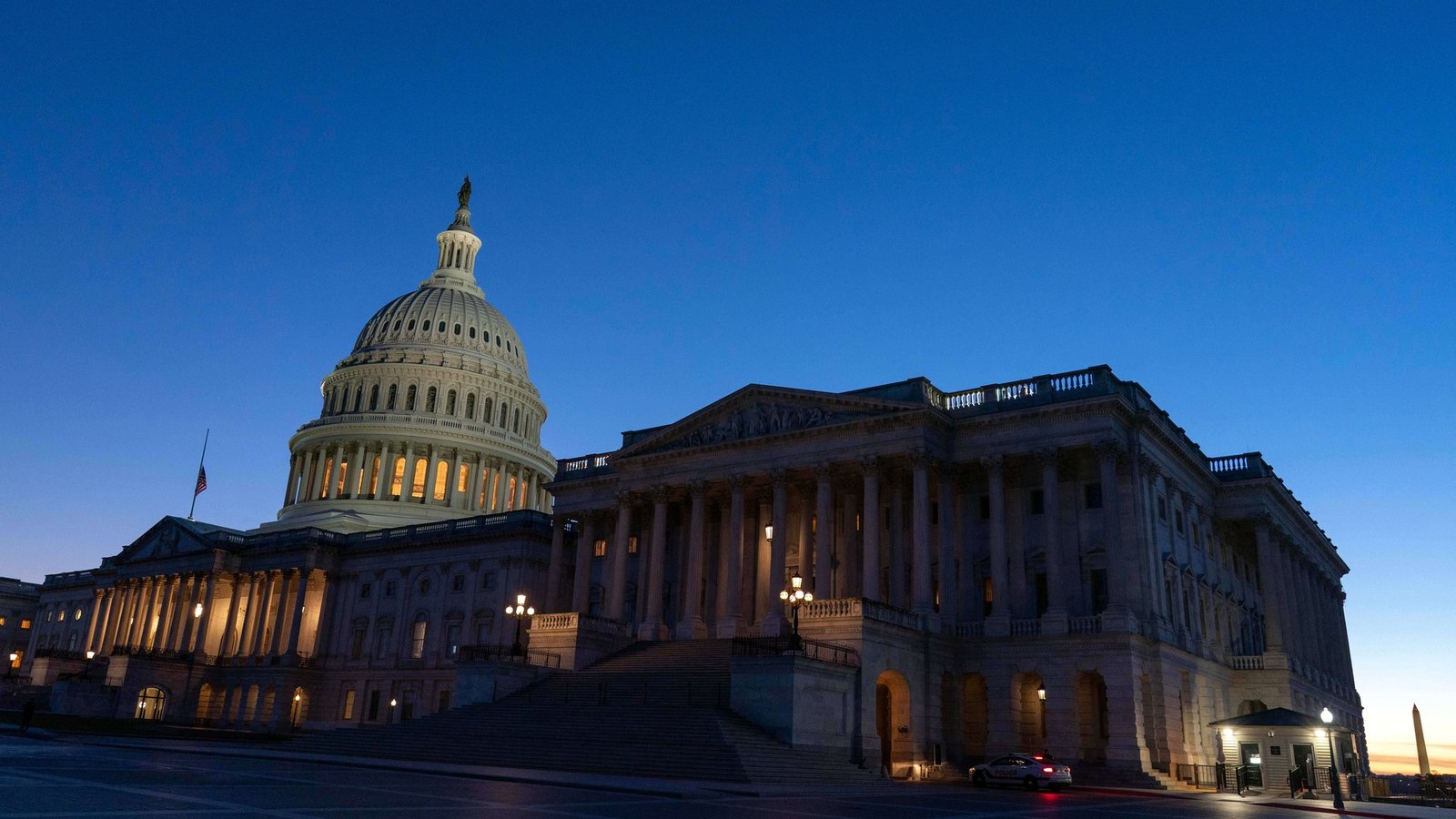
Congress is close to reopening the government after a few Senate Democrats joined with Republicans to pass a bill that would fund the government through the end of January. With the House set to vote Wednesday, Americans may start looking ahead to what’s next.
The government shutdown has been the longest in U.S. history, spanning more than six weeks. It has caused disruptions at airports across the nation, forced hundreds of thousands of federal employees to work without pay and others to be furloughed, and even halted funding for childcare and food stamps.
With a funding bill potentially passing this week, we examined what this means for Americans.
When will the government reopen?
The government will reopen immediately after President Donald Trump signs the legislation. However, it must first pass through the House, a vote scheduled for 4 p.m. ET on Wednesday.
Once signed, the bill will fund the government through Jan. 30, 2026.
Will SNAP benefits resume?
The legislation includes a provision that would fund the Supplemental Nutrition Assistance Program (SNAP) through September 2026.
SNAP funding has been a hot topic during the shutdown, with a federal judge ruling the Trump administration must tap into emergency funds to cover November payments. However, the Supreme Court paused that order as appeals continued.
Other nutritional programs, such as the Special Supplemental Nutrition Program for Women, Infants, and Children, were kept running through emergency funds during the shutdown.
What about federal workers?
Throughout the shutdown, more than 670,000 federal employees were furloughed, according to the Bipartisan Policy Center. Those employees will be asked to return to work once the bill is signed into law.
The legislation also includes language requiring the Trump administration to reverse any firings of federal workers within five days.
The president recently confirmed he will abide by the Senate’s legislation, reversing the firings. He told ABC News, “I’ll abide by the deal. The deal is very good.”
Will federal workers receive back pay?
The Bipartisan Policy Center says that 730,000 employees were still required to work throughout the shutdown, but without pay. However, some workers were paid through emergency funding, including U.S. military members.
The new legislation notes that all furloughed employees and those who worked during the shutdown will receive back pay, according to ABC News. Back pay is required under the Government Employee Fair Treatment Act of 2019, which Trump signed into law during his first term.
What will happen with air traffic control? Will flights return to normal?
The government shutdown further strained an industry already struggling with short staffing. Due to the shutdown, air traffic controllers were not paid, and some failed to report for their shifts, forcing others to work overtime.
Air traffic controller staffing numbers became so dire that the Federal Aviation Administration reduced flights by 10% at 40 major airports. Those reductions led to thousands of delays daily and thousands more cancellations since last week.
However, in an update on Tuesday, Transportation Secretary Sean Duffy told reporters that more controllers have been returning to work because a potential reopening is in sight and they’re “feeling hopeful.”
But without a government funding deal, he said, air travel around Thanksgiving would have to be reduced “to a trickle.”
He said when the government reopens, controllers will receive 70% of their paychecks within 24 to 48 hours after Trump signs the legislation. However, he said the FAA will not lift its 10% flight cut mandate until safety data improves.
Experts told ABC that once the 10% cut is lifted, it will take several days for airlines to recalibrate their networks and flights to return to normal.
Duffy previously said travel delays will likely linger after the government reopens, even stretching into the holiday season.
“This is gonna live on, in air travel, well beyond the time frame that this government opens back up,” Duffy said.
What is the current status of health care subsidies?
The stalemate that kept the shutdown going centered on Affordable Care Act subsidies, which are set to expire on Dec. 31 under Trump’s “Big, Beautiful Bill.” Current subsidies, adopted during the COVID-19 pandemic, allow many lower-income Americans to obtain healthcare coverage at little to no cost.
However, if Congress does not agree to renew the subsidies, the average premium for many Americans could more than double in the new year.
Since the start of the shutdown, Democrats have demanded that any reopening legislation include renewals of ACA subsidies. However, the legislation the Senate passed this week does not include renewals.
Separate from the legislation, Senate Republican leaders reportedly promised to allow a vote on a bill of Democrats’ choosing related to the ACA in December. It’s unclear what that bill could look like or if the vote will actually occur, as there’s nothing formally written in the legislation. House Republican leaders have not committed to a vote on ACA subsidies.
What else does the legislation say?
Another significant factor in the reopening legislation is a $400 million designation towards security. Members of Congress, as well as members of the Supreme Court, will receive $1 million or more for personal security.
The protections come amid heightened violence against political officials. In the past year, two Minnesota Democrats were targeted in “politically motivated attacks.” Then, earlier this fall, conservative activist Charlie Kirk was assassinated while speaking at a university in Utah. Trump was targeted for assassination twice during the 2024 presidential campaign.
The legislation also includes language that would effectively end the hemp-derived THC industry. The bill redefines “hemp” to exclude intoxicating products like THCA and delta-8 THC. Both chemicals are similar to the psychoactive chemical in traditional cannabis that gives users a high.
While some states have banned hemp THC products, federal law still allows their sale if they contain no more than 0.3% THC. However, this legislation would change that, effectively banning these products for consumer use nationwide.
What may still be delayed?
Americans will still feel the effects of the government shutdown, even after it reopens. Some resources that haven’t received funding will need to get back up and running before they can provide services again.
For example, the Low Income Home Energy Assistance Program, which helps some families pay energy bills, will still be delayed. States typically receive their funding for the program in early November, but with the shutdown, those funds have not been distributed.
Americans will likely feel the effects of the delay as colder months quickly approach.
Head Start programs could also face additional delays because many of their grants expired on Oct. 31.
The post The government could reopen this week. Here’s what happens next appeared first on Straight Arrow News.