

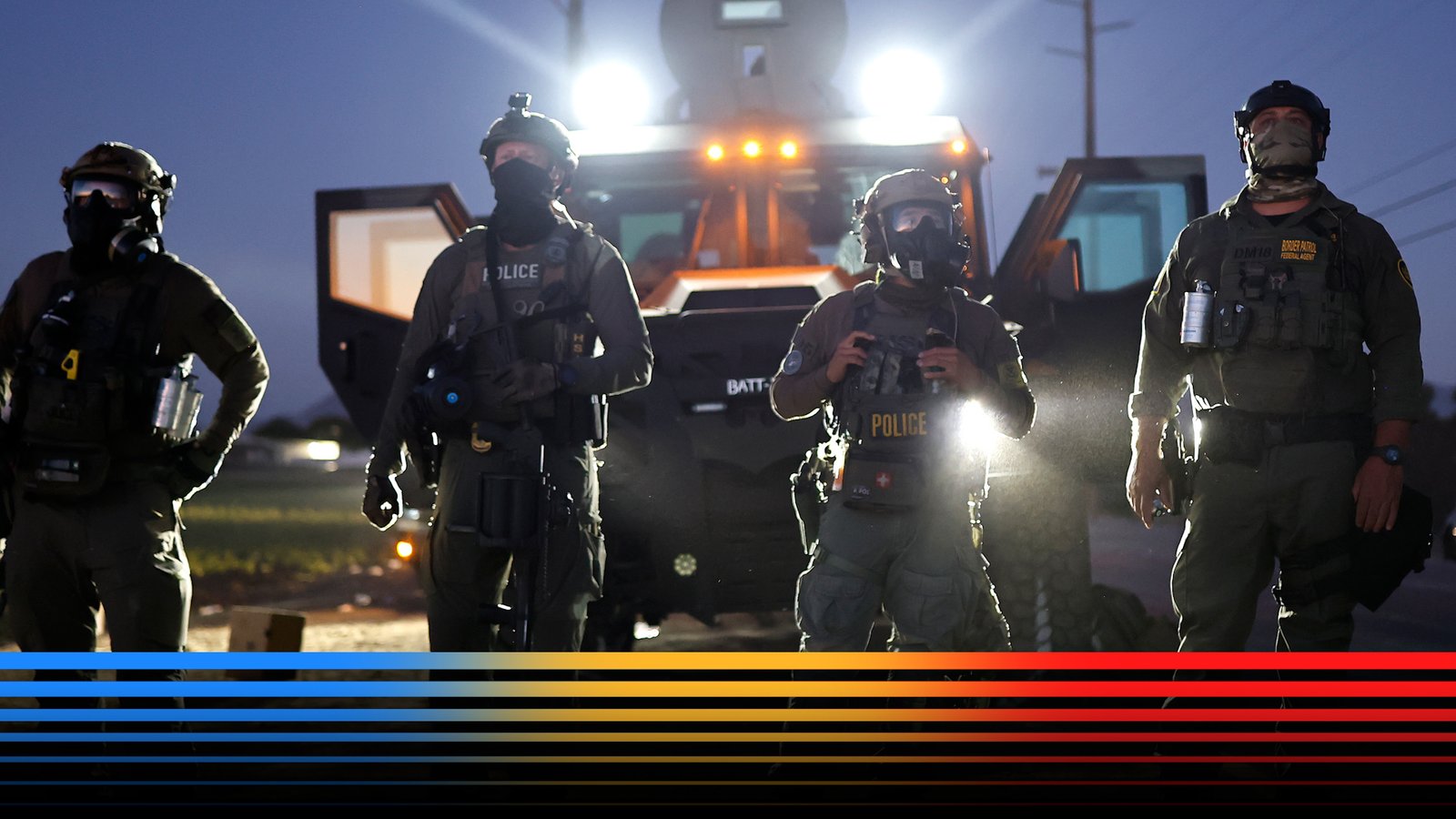
Immigration and Customs Enforcement (ICE) has recently been at the center of U.S. political debates, but media coverage often depends on which outlet you watch. This week’s Bias Breakdown compares and contrasts how news organizations on the left and right framed the recent arrest of Des Moines Public Schools Superintendent Ian Roberts.
Fox News led its report by citing an ICE memo that called Roberts a “criminal illegal alien,” emphasizing his immigration status and prior weapons charge in its coverage. CBS News, on the other hand, began with footage of protesters and described Roberts as an “ICE fugitive” and “an immigrant from Guyana,” spotlighting community outrage over the arrest.
The language alone in the opening descriptions of Roberts — “illegal alien” versus “ICE fugitive” — sets a tone. Fox News’ host also called the situation “shocking” and “stunning” when setting up an interview with a former immigration official. Media watchdog group AllSides notes that word choice carries political implications, often signaling an outlet’s perspective or ideology.
Different takeaways, different realities
Fox News focused its coverage on how Roberts was here illegally with deportation orders and had prior gun charges. The network questioned whether the school district overlooked warning signs. While CBS News also reported questions surrounding the school’s background check on Roberts, the network also pointed to his status as an Olympic athlete and noted that community members were questioning ICE’s motivations.
Both outlets reported the facts with different framing — one highlighting legal violations, the other emphasizing community support — leading audiences to vastly different conclusions.
This is an example of how the media can spin a story, another example of media bias.
“This type of bias describes the way in which a journalist writes using a combination of types of bias (such as sensationalism, slant, and word choice) in order to leave a desired impression on the reader,” AllSides explains.
Bias by omission: What gets covered and what doesn’t
This divide extends beyond word choice and spin. Right-leaning outlets often highlight ICE operations that purport to remove dangerous criminals— alleged MS-13 leaders, a terror suspect or a convicted child predator. Left-leaning networks, meanwhile, devote more attention to ICE mistakes, such as misidentifications or excessive force used by agents.
In all of these examples, partisan networks ignored the stories covered by outlets on the opposite side. This selective approach leaves audiences with only a partial view of ICE’s operations, reinforcing divided perceptions and shaping opinion along ideological lines.
Each approach reflects what AllSides calls “bias by omission,” where certain stories are downplayed or ignored because they don’t fit a preferred narrative. The result? Viewers only get part of the picture, shaped by selective editorial choices.
The post ICE coverage exposes partisan media’s not-so-hidden agendas: Bias Breakdown appeared first on Straight Arrow News.