

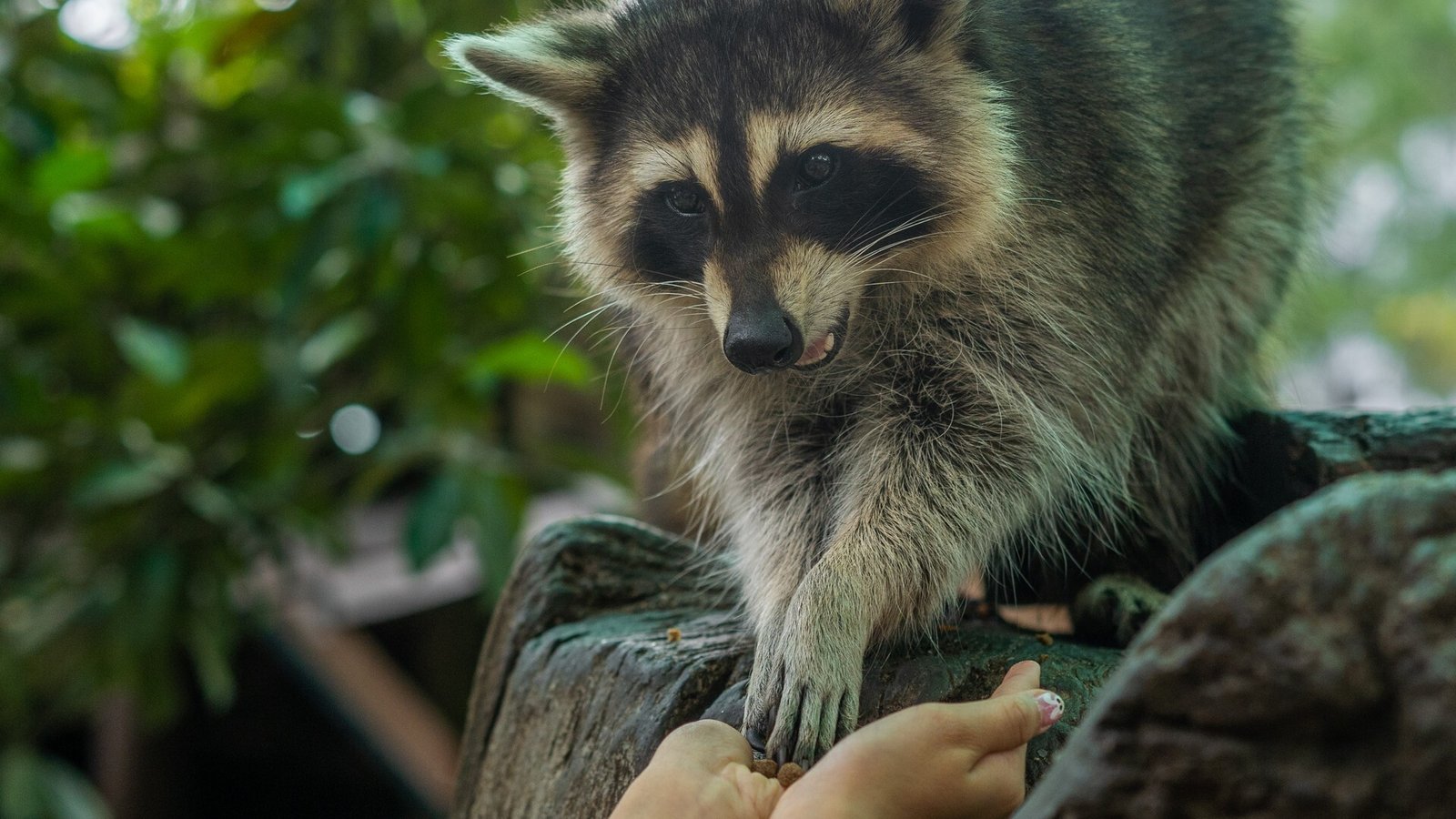
Raccoons living in urban environments are evolving toward more pet-like qualities. That’s according to a new study that found so-called “trash pandas” physical appearances are changing, an early sign of domestication, in response to human life around them.
Researchers who conducted the study say that the common belief that domestication was started by humans through capture or selective breeding is wrong. They instead insist that the process began much earlier, when animals adapted to human communities.
Human trash lures the brave
The same thing now appears to be happening with raccoons, and human trash plays a major role in that process, according to scientists.
“One thing about us humans is that, wherever we go, we produce a lot of trash,” Raffaela Lesch, a biologist and co-author of the study, told the Scientific American.
Heaps of discarded scraps from humans have become a vital food source for raccoons brave enough to rummage through people’s trash, under the condition that they aren’t aggressive towards people.
“If you have an animal that lives close to humans, you have to be well-behaved enough,” Lesch said. “That selection pressure is quite intense.”
In the case of dogs, their ancestors would have rummaged through people’s trash, and cats’ ancestors would have likely been drawn to trash heaps by the presence of mice. These animals developed tameness over time through exposure to humans and passed these traits to their offspring.
The role of ‘domestication syndrome’
Another trait of domestication is a shorter face, a smaller head, floppy ears and white patches on the fur, which Charles Darwin noticed in the 1800s. The phenomenon is now known as “domestication syndrome.”
Biologists say these changes in physical traits have given animals living close to humans a better chance of survival, as it is typically a sign of tameness.
Now, researchers note in the new study that they are observing domestication syndrome in other wild animals, including raccoons. Their methodology included reviewing 20,000 pictures of raccoons across the United States. The team found that raccoons in urban environments had snouts that were 3.5% shorter than those of rural raccoons.
Prior observations of ‘domestication syndrome’
The discovery fit with prior observations of city foxes and mice and suggests “once wild animals start spending time in the proximity of people, they become a little bit less afraid and perhaps even start showing signs of domestication syndrome,” according to Adam Wilkins, a biologist at Humboldt University of Berlin, as reported by the Scientific American.
Wilkins was not involved in the study but has significant knowledge about the theory of domestication syndrome.
What do researchers want to look at next?
Lesch told Scientific American that she would like to do further studies on raccoons by trapping them and comparing their genetics with those of other rural or urban animals. She said that researchers could test whether there are similar occurrences in armadillos and opossums.
“I’d love to take those next steps and see if our trash pandas in our backyard are really friendlier than those out in the countryside,” she said.
The post How your trash is domesticating raccoons appeared first on Straight Arrow News.