

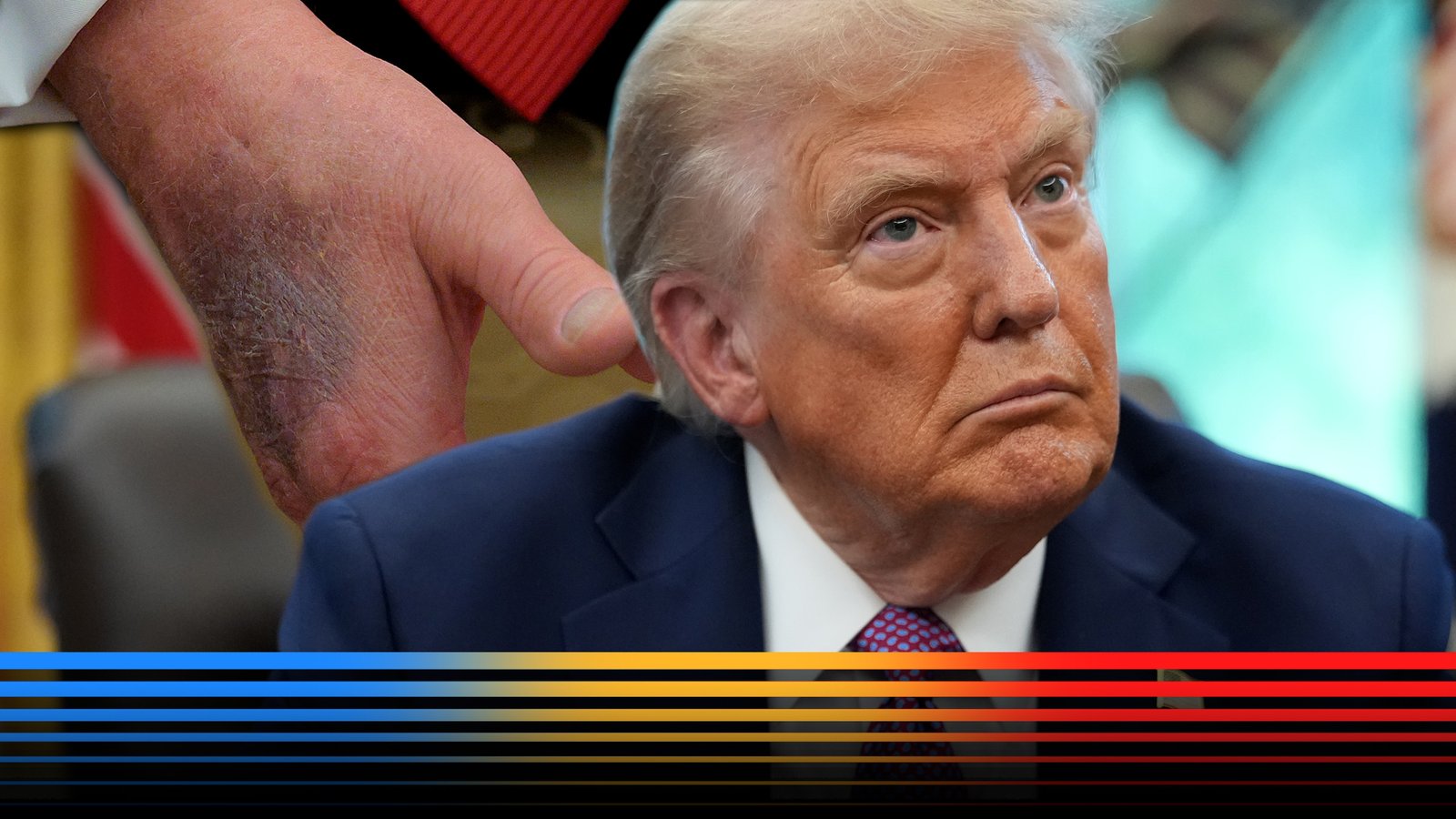
Rumors about President Donald Trump’s death swept across social media over Labor Day weekend, sparking a wave of speculation about his health. The claims were quickly proven false, but the frenzy gave left and right-leaning media outlets an opening to push competing narratives — raising questions about how the press should cover a president’s health without veering into bias.
Left and right media narratives
On the left, commentators used Trump’s brief absence from the public eye to float broader concerns about his age and wellness. Some commentators on MSNBC and CNN suggested his silence was “concerning” and pointed to his hand bruising as a sign of possible health issues. That speculation — often framed as “what if” scenarios — fed into conspiracy chatter online.
Meanwhile, right-leaning outlets largely dismissed Trump’s health as a non-issue, instead criticizing the coverage itself. Outlets like Fox News and Newsmax accused other media outlets of hypocrisy, arguing that President Biden’s health had not faced the same scrutiny when he went stretches without public appearances.
Deflection and speculation
The contrasting approaches highlight two common forms of media bias. On one side, speculation risks sensationalizing a story without evidence. On the other side, omission and deflection steer attention away from facts that might matter to the public. In both cases, audiences are left with partisan framing instead of straightforward reporting.
Transparency of a president’s health
The White House has said Trump’s hand bruising is the result of handshakes and aspirin use, an explanation some left-leaning media medical experts have said “tracks.”
Still, the broader question remains: how much transparency should Americans expect when it comes to a president’s health? Presidents have a long history of concealing health concerns, from Woodrow Wilson’s stroke to John F. Kennedy’s Addison’s disease to Franklin D. Roosevelt’s limited public appearances in a wheelchair.
The debate centers on how much transparency the public should expect and how newsrooms should navigate the issue. Some outlets, like CBS, chose not to cover the Trump death hoax or renewed health scrutiny at all, while ABC News criticized networks’ silence.
The split in coverage shows how partisan framing, whether through speculation or silence, can shape public perception and how the media handles stories like this may ultimately shape public trust as much as the health disclosures themselves.
The post Trump death hoax: Speculation and spin overshadow facts: Bias Breakdown appeared first on Straight Arrow News.