

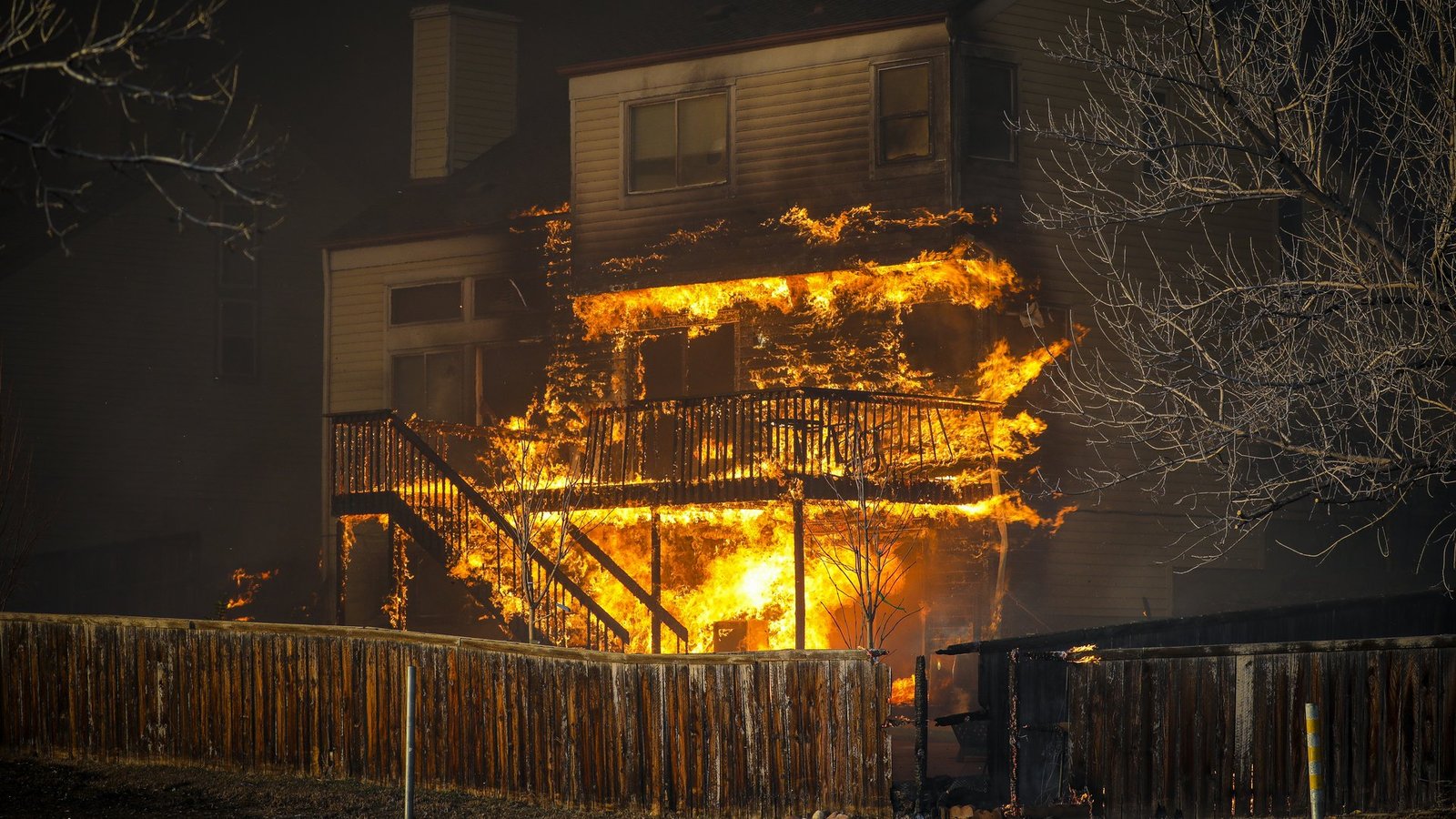
Xcel Energy will pay $640 million in a settlement related to the company’s role in the 2021 Marshall Fire in Colorado. The Minnesota-based utility company did not admit any wrongdoing.
Investigators found that sparks from an Xcel power line were one cause of the Marshall Fire, which destroyed nearly 1,000 homes and killed two people, according to reporting in The Associated Press. Xcel announced the settlement a day before jury selection was scheduled to begin in the lawsuit brought by homeowners and insurers impacted by the fire in the suburbs between Denver and Boulder.
“We recognize that the fire and its aftermath have been difficult and painful for many,” Xcel CEO Bob Frenzel said in a press release. Frenzel also said the company maintains its “conviction” that its equipment “did not cause the Marshall Fire or plaintiffs’ damages.”
Utility companies have been involved in some of the most devastating fires across America in recent years. From Hawaii to Texas, local utility companies have faced lawsuits following deadly blazes. Although preventative measures are being taken, each year brings another fire linked to power grid infrastructure. The lawsuit over the Marshall Fire is one of many alleging that some of America’s largest utility companies are at fault.
Why do power lines cause fires?
Downed lines create a serious fire risk when a surge of electricity jumps from the power line to nearby material. These high-energy sparks are called arcs. Between 2016 and 2020, power lines caused 19% of all U.S. wildfires, according to the Western Fire Chiefs Association.
When conductors break and fall, they can remain energized for tens of minutes, creating high-temperature arcs that can ignite vegetation. In 30% of cases identified by the Texas Wildfire Mitigation Project, protective devices like fuses fail to shut off power because the fault draws too little current.
Vegetation contact happens when trees fall across lines or branches span two conductors, creating arcs multiple feet long. The Texas project documented branches contacting lines over 24-hour periods before burning them down.
Another danger known as “conductor slap” occurs when lines swing together during high winds, ejecting hot metal particles that can ignite ground vegetation. Aluminum conductors create burning particles as they fall. The Marshall Fire occurred during 100 mph winds.
What preventative actions are utility companies taking?
The Western Fire Chiefs Association identified several preventative measures, including more frequent tree trimming and deploying protection devices that rapidly shut off power when lines contact objects. Utility companies can also bury power lines, but that process is costly and time-consuming.
During high-risk weather, utility companies sometimes turn off the flow of electricity on power lines that present a fire risk. Pacific Gas & Electric in California pioneered this approach, but it creates outages for customers.
However, some of these improvements require massive capital investments across sprawling grids. As Lawrence Berkeley National Laboratory researchers noted in Utility Dive, “There is no single silver bullet for the wildfires problem and a combination of different measures is needed.”
What other fires have been linked to power lines?
Nine of California’s 20 most destructive fires in recent decades were caused by electrical infrastructure, according to Lawrence Berkeley National Laboratory.
Pacific Gas & Electric faces the most extensive legal troubles. The utility pleaded guilty to 84 counts of involuntary manslaughter for the 2018 Camp Fire that killed 85 people and destroyed Paradise, California. It paid billions in settlements before emerging from bankruptcy in 2020.
Hawaiian Electric faces ongoing lawsuits over the 2023 Lahaina Fire that killed 102 people in Maui, though the company disputes liability. The cause of the Eaton Fire that devastated Altadena, California, in January is also linked to power lines operated by Southern California Edison.
Xcel may also face legal liability over its role in the 2024 Smokehouse Creek Fire in Texas. The company faces 25 ongoing lawsuits and has already settled more than 150 claims, according to its website.
In March of 2024, the company said its “facilities appear to have been involved” in igniting the fire, but Xcel said it “disputes claims that it acted negligently.”
The post Xcel Energy to pay $640 million while denying fault for 2021 Marshall Fire appeared first on Straight Arrow News.