

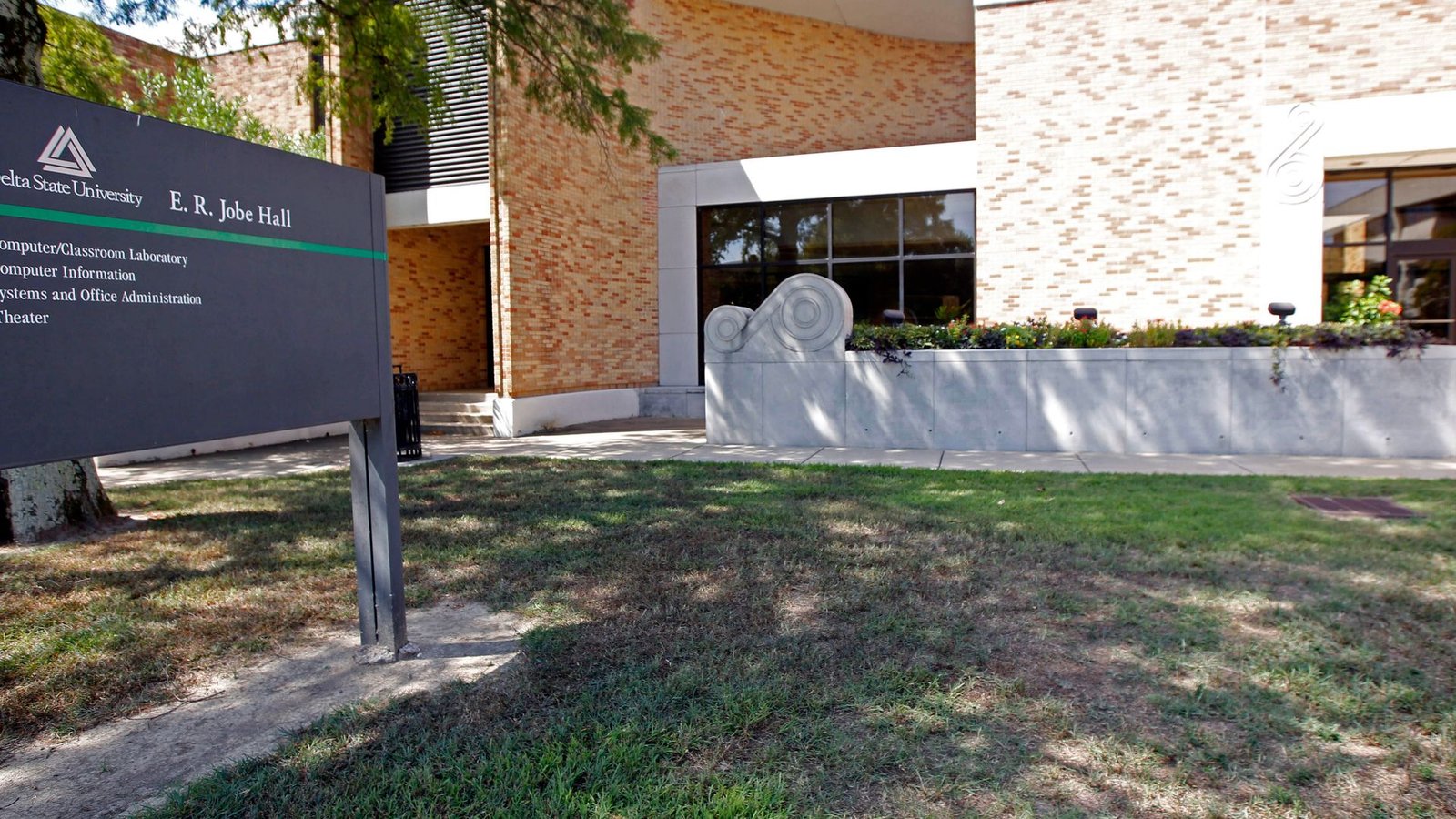
The campus of a small university in Cleveland, Mississippi, became the center of a family’s search for answers after a tragic discovery. Demartravion “Trey” Reed, a 21-year-old Delta State University student, was found hanging from a tree on Monday.
Reed’s death has sparked widespread discussion on social media, raising questions about the circumstances while drawing attention to Mississippi’s history of racial violence.
Family seeks answers
State officials stated that their investigation so far has shown no signs of foul play. Reed’s family, however, is not satisfied with that conclusion and wants an independent autopsy. They are calling for more information, questioning how and why their son’s life ended on a campus he once called home.
“We will seek answers independently from Delta State University and from the coroner’s office, and if need be, independent from the state coroner’s office, because we need answers as to what happened to Trey Reed,” Vanessa J. Jones, an attorney for Reed’s family, said Tuesday during a press conference.
Civil rights attorney Ben Crump, retained by Reed’s family, released a statement, saying Trey was a deeply loved and respected young man.
Crump added, “We cannot accept vague conclusions when so many questions remain. I stand with the family, and I will lead a team of civil rights leaders and organizations in pursuing transparency and answers for Trey’s family.”
Preliminary findings and investigation
Mississippi news outlets report that a preliminary autopsy by the Bolivar County Coroner’s Office found no signs of trauma on Reed’s body, including lacerations, contusions, broken bones or injuries consistent with an assault.
Delta State University Chief of Police Michael Peeler said Reed’s body is now at the Mississippi State Medical Examiner’s Office, with results expected within 24 to 48 hours. He described the case as active but isolated, and confirmed that there are no current threats to students, faculty or staff. Peeler said foul play was ruled out based on the initial evidence, though the investigation is ongoing.
Jones said the family is not looking to place blame but wants answers, including the location of security cameras that could “easily” show what happened in the early hours of Sept. 15.
Chief Peeler said videos of the incident are in the hands of Cleveland Police, who are leading the investigation, but he would not disclose what the footage shows. Campus police and the Mississippi Bureau of Investigation are also involved, while lawmakers are calling for federal oversight.
U.S. Rep. Bennie Thompson, D-Miss., said Tuesday that authorities “must leave no stone unturned” and cautioned, “We cannot ignore Mississippi’s painful history of lynching and racial violence against African Americans.”
Campus response to Reed’s death
Delta State University canceled classes on Monday following Reed’s death. In a video message, President Dan Ennis expressed his condolences while assuring students that the campus is safe to return to and continue their studies.
“We continue to meet with and be in contact with Trey’s family. We give them our love and support, and we know that we can never fully heal this wound,” he said.
On Wednesday, state and university officials provided an update on the case. Ennis acknowledged that Reed’s death resonates beyond facts, touching on the emotional impact of his life and its tragic end. He said the university is coordinating with the next of kin, as chosen by Reed, to offer support while respecting his wishes. Ennis also noted that law enforcement presence on campus has been increased following threats, though none have been deemed credible so far.
“We are supposed to be a place where students come to be safe and learn,” Ennis said. He emphasized that the university embodies positive race relations, with Black and white students interacting without issue, and that the institution should not be associated with hate or hate crimes.
Skepticism, demand for answers surrounding case
The NAACP also addressed Reed’s death in a public statement. While officials said they found no evidence of foul play, the organization said they question the findings, pointing to the nation’s history of racial violence. “Our people have not historically hung ourselves from trees,” the post read, underscoring why many in the community remain skeptical.
Federal data on hate crimes
In September 2024, the FBI released its 2023 Hate Crimes Statistics report, which compiles bias-motivated offenses reported by law enforcement nationwide. The report tracks crimes driven by race, ethnicity, religion, sexual orientation, disability, gender or gender identity.
The data showed an increase in hate crime incidents, with 11,862 reported in 2023, up from 11,634 in 2022. Crimes motivated by race, ethnicity or ancestry were the most common, with 5,900 reported cases. More than half of those targeted Black or African American individuals, making anti-Black incidents more than three times higher than the next largest racial or ethnic category.
Hate crimes and racially charged rhetoric remain a persistent concern in the United States. In recent years, public content, including music and social media posts, has at times glorified violence against Black Americans, prompting civil rights advocates to warn about the growing normalization of racial hatred. One widely circulated music video, for example, included lyrics referencing public lynchings, sparking concern for its racialized imagery and violent message.
Advocates say this modern rhetoric echoes the country’s long history of racially motivated attacks. Between 1865 and 1950, more than 6,500 people, primarily Black Americans, were killed in acts of racial terror, including lynchings, according to the Equal Justice Initiative. Emmett Till, the 14-year-old abducted and lynched in Mississippi in 1955, became a national symbol of the brutality of the Jim Crow era and helped spur the passage of anti-lynching legislation decades later.
Mississippi’s history of racial violence
Reed’s body was discovered about 30 miles from Money, Mississippi, where Till was killed. The state’s history has long been shaped by racial inequality. After the end of Reconstruction in the late 19th century, Jim Crow laws established segregation that touched every aspect of life for Black residents.
By the 1950s and 1960s, the Ku Klux Klan carried out bombings, beatings and murders across the state, while Black leaders and activists organized to resist discrimination and push for civil rights. Their efforts laid the groundwork for legal and social changes that continued after the 1960s, gradually expanding opportunities and protections for Black Mississippians.
The post Trey Reed’s death reignites conversation on racial violence in Mississippi appeared first on Straight Arrow News.